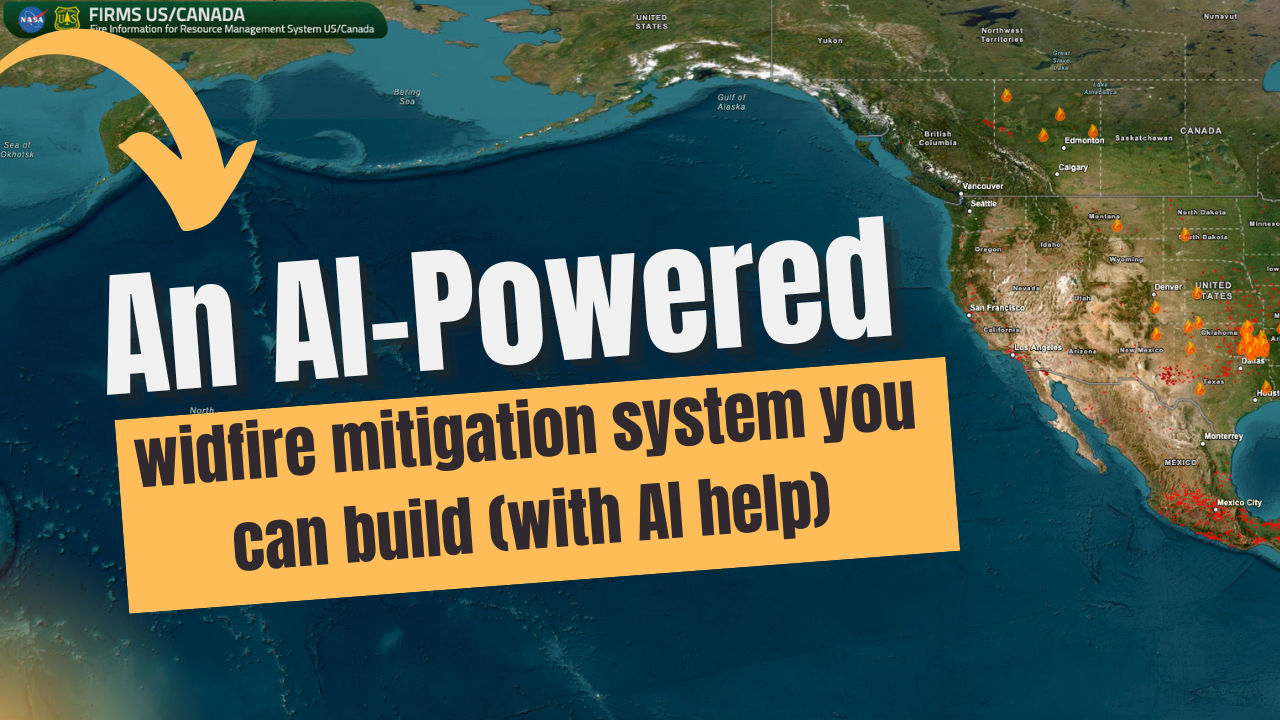
It lives! a not very brief (sorry) walkthrough of the fire mitigation system as it is currently. It’s quite far along, and after lots of struggles it’s working very well except some of the physical stuff still isn’t done. It’s challenging to find pro help on Maui with all the work available related to Lahina and Kula rebuilding. So some of this is going to have to wait for next fall. I plan to continue development back on the mainland and get the system ready for others to implement it in a more finished form.
The notification and response components are fundamentally complete and working flawlessly except one camera keeps dropping out because I don’t have the AI chip reducing the CPU load. Oddly, that’s a problem you wouldn’t be having if you built it today, but I need to wait for a new release to fix my implementation unless I ditch a lot of already configured work.
Really, the biggest improvement has been getting Claude (the AI) involved. If you wanted to build a completely custom version I will soon be able to send you file that you drop into your copy of Claude, which brings him (her, it?) fully up to speed with everything we’ve learned. Claude will build you exactly the system you want and help you configure, test, and tune it for your exact use. And if you like, he’ll also teach you what every step means and does.
I hope you find the video useful and interesting. It’s pretty heavily packed with information. It might even be worth 30 minutes of your life
Project: Save Your Home From Wildfires With Solar Power
Episode 1: Introduction
Can Solar Power Help Protect Your Home From Wildfire? Yes it can, and this project will show you how. There is a long list of preparations you can undertake to make your home more defensible. We’re going to cover most of them. But the core of this project is using stored water to soak down your home and the surrounding property.
YouTube has some trending videos on using a gas-powered portable pump, an intake line you drop into a swimming pool, and fire hoses to defend a home or other structures. I actually have a similar system mounted on a small trailer with a storage tank at my shop on the mainland. I used it last summer to fight a fire that I stupidly caused when I used an angle grinder to cut off a piece of rebar on the concrete mounts for my solar container project. The sparks started a smoldering fire that I didn’t see (even though I looked) which turned into a grass fire. My fire pump system worked well, though the fire department still had to come to extinguish the areas I couldn’t reach. My neighbors now call me “Fire Marshall Bill” after the Jim Carrey character–they even went so far as to ziptie signs on my shop gate that say “No Parking By Order Of The Fire Marshall”. That fire will take a while to live down. But on the plus side, I have an experience-based understanding that while the portable pump approach is an excellent idea and a useful approach it has a few drawbacks.
It’s expensive–more expensive than most of the videos claim. The gas-powered pumps range from $400 to $1200. A 50 foot firehose ranges from $150 (single jacket) to $300 for double jacket hose. You’d probably need at least four for a typical home. Nozzles range from $50 for plastic to $300 for brass. You’d probably need three for a typical home. You’d need to store and occasionally replace gasoline, maintain the equipment, and store it all in a convenient location. The initial outlay would be $1150 to $3300 plus maintenance. I spent $2500 on my fire trailer and it actually needs another hose ($300) to be practical. That expense is for something that has no other use, and therefore would be unlikely to get the maintenance it actually requires.
You and probably one other person have to be present to fight the fire. Not only is this dangerous, it’s also unreliable. If you are simply not present when fire threatens your home there’s no protection–if I had not been at my shop when a someone passing by spotted the fire and ran in to let me know the equipment would have been unused, and worthless. And any firefighting expert will discourage this approach. People staying in defiance of an evacuation order to defend their home not only endanger themselves but can also divert resources and the attention of firefighters who are better used defending entire neighborhoods. As one professional firefighter told me “we don’t just get to say ‘well it was their choice not to obey the evacuation order’. Our job is saving lives. If someone ignores evacuation orders, we’re going to have to try to save them when things go badly. That doesn’t just divert resources, it can put firefighters in danger.”
One of the better versions of the “pool-based fire defense” ideas is this one. It still requires you to be present, so if you aren’t home when a wildfire threatens it’s fundamentally worthless. But if you are, you could at least set it up, get it going, and evacuate assuming you have 60 minutes or so. The author also mentions two sources I drew from, and deals well with all the issues of linking together the various pipe and hose connector thread issues. So I can tell he’s done some good research. If you’re on a tight budget and vegetation control and general home hardening methods aren’t enough, this could be a good alternative to the complex system I’m building. But you still have to be there to make it work.
We’re going to bring you along as we build a system that can automatically defend your home without you being present. A system you can monitor and control from anywhere in the world. We’re not just theorizing about this system, nor are we trying to sell you anything or starting a business to offer this equipment. We’re building and testing it in this video series and in the blog posts that accompany it. Everything we do will be in the public domain. We’re going to give you a recipe for our design that you can DIY. One caveat, some of the links for specific equipment are affiliate links. We make a small commission if you use these, which may someday help support this channel. But the channel is a hobby for me. I’m a retired 78 year-old geezer with pro-level ADHD and I really only work this hard to keep my brain busy. I’m purely an expert amateur, I’m not going to do any of this stuff for income.
Don’t assume you have to buy everything you see me using to effectively mitigate the hazard to your property, and the cost will vary hugely depending on what you already have, and how much of the work you can do yourself. In fact you may already have most of the equipment.The core of the system is a battery-backed solar power system–that might be just an upgrade to a system you already own (as ours is). The same system that you install to protect your home is one you can use every day to power your home to reduce your power bill during normal use or keep your lights on and your refrigerator cold during power outages. It’s going to be valuable to you every day. You’ll maintain it–everyone does. And so it will be tanned, rested, and ready when you need to call on it.
The system that makes this possible is a hybrid solar inverter system—I am using the EG4 12000PV—and a 14kWh EG4 Wallmount battery from Signature Solar. The system can scale tremendously to mitigate the wildfire risk to larger homes and mid-sized businesses. And while it’s helping mitigate those risks it’s also supplying power to your home or business to reduce utility costs and deal with outages. There will be links (some are affiliate) in the video descriptions and at the end of the blog posts. Use them if you like or just type in the URL. If you use the links Signature Solar has agreed to give you a $50 discount.
Why solar? The original plan was to use existing pool circulation filter pumps to feed a perimeter header with large sprinklers to soak down the area surrounding your home as well as the walls and roof of your structures. Because of the way my pool system works I’m going to add a dedicated sprinkler pump. If you don’t have a pool then this might be a great opportunity to add one. A reasonably sized above ground pool will serve nicely, and you can probably use the circulation pump. But in almost every fire emergency grid power will be shut off which would render the system useless without solar/battery/inverter backup. There are automatic natural gas, diesel, or gasoline generators that can supply similar amounts of power but all have fuel and reliability issues to contend with. A properly sized PV system with a 14KWh battery can supply a 1.5HP sprinkler pump with the 2kW it consumes for at least seven hours pumping 80 gallons per minute even if the sun isn’t shining. With sun and intelligent management of the water, the system can suppress fire for as long as the water supply lasts, which could be a very long time if the water main continues to add water to the pool through the makeup valves. Even a natural gas-supplied autostart emergency generator will be less reliable–I also have firsthand experience that leads me to that conclusion. I had a Generac natural gas-fired backup generator at a home I used to own that had frequent power outages. Despite having it automatically run once a month and load test itself, and having it professionally maintained, every time I needed it there was something wrong.
We’ll also cover simpler fire safety efforts to create a defensible boundary around your home and build a plan that any homeowner can and should carry out, following guidance from state and national fire safety organizations. Both the videos and these blog posts will include links to resources that can help you plan for emergencies that could otherwise turn into disasters, for you, your family, and your neighbors.
We’re undertaking this effort at our home in Maui, and we’re enlisting our neighbors in the effort–sharing information with them and working with our local County Fire Prevention Bureau, the Maui County Department of Fire and Public Safety, the County Council, the Hawaii Wildfire Management Organization, and the Mayor’s office for advice, possible assistance, and whatever resources are available. But I also expect most of the effort and cost of mitigation will be up to those of us who own homes here. Part of this effort is reaching out to neighbors for their suggestions and concerns and sharing information with them about the resources available to help protect them. Below is a letter I wrote to our neighbors in the general area of our home. Perhaps you can use it as a template to begin communication with your neighbors.
Dear Neighbor
The Lahaina fire, the fires upcountry, and the current disaster in Los Angeles undoubtedly have people looking at their own fire hazard situation a bit more carefully. I think that <our neighbohood> street and the houses on streets that connect to it have some particular hazards that could be dealt with effectively. I believe we as neighbors should start an effort to reduce the hazards as much as is feasible and effective.
I’m reaching out to the Maui County Fire Prevention Bureau, the Maui County Department of Fire and Public Safety, the County Council, the Hawaii Wildfire Management Organization, and the Mayor’s office for advice, possible assistance, and whatever resources are available. But I also expect most of the effort and cost of mitigation will be up to those of us who own homes here. I’m asking for your suggestions and concerns, I think this is an issue that we can best deal with as neighbors.
Each of us can make some immediate headway by assessing our own preparedness. One of the responsibilities of the Maui County Fire Prevention Bureau is to advise Homeowners on fire safety of their property. You can reach them at: (808) 876-4690 or email: fireprevention@mauicounty.gov. I understand that they will do individual inspections and provide advice if you request it.
There is also an excellent website of wildfire preparedness at hhtps://www.hwmo.org and an even better document available as a PDF on that website on how to reduce wildfire risks to your family, home and assets.
Beyond whatever you believe about climate change, wildfires are clearly a growing problem. It might surprise you to know that Hawaii is now considered one of the most wildfire-prone states. Each year, about half a percent of Hawai’i’s total land area burns in wildfires, equal to or greater than the proportion burned of any other US state. The heavy rainfall in Haiku that we might consider protective is part of the hazard—it enables the rapid and heavy growth of brush and grasses that make up the fuel for large-scale wildfire. Add the wind the north shore is famous for, and increasingly dry summers and the result is a hazard worth mitigating.
Maui county has a massive and highly detailed hazard mitigation analysis and plan—1043 pages long, available as a PDF here: https://www.mauicounty.gov/DocumentCenter/View/125977/2020-Maui-County-Hazard-Mitigation-Plan-Final . I’m slowly making my way though it, but the plan considers the wildfire danger of our particular area to be low. That’s understandable, even in drought years we’re not in a dry area for most of the year, but there are some particular differences that I think make our immediate area more of a hazard than might be anticipated. I also assume the plan may be revised after the upcountry fires, which were also in areas considered low hazard which became dry, as our area is, in the summer months.
The particular differences that I believe add substantially to our risk are:
Our neighborhood is served by a single street—there is no alternate route to exit the area quickly in case of evacuation.
The end of our evacuation route is heavily covered in non-native Guinea Grass (Megathyrsus maximus), one of the most problematic invasive grasses on Maui. This grass and other non-native fire-adapted vegetation was directly involved in both the Lahina fire and the upcountry fires. This is the plant you see along the road growing 8-10 feet tall—it looks much taller in places. There are other equally dangerous species mixed in. These fire-adapted grasses spread rapidly from the big seed heads that you see from the road. The grasses take advantage of fires or mechanical clearing of native plants to out-compete native vegetation. It’s considered by experts to be the major fire hazard on Maui, especially during the dry summer months because it creates large masses of dry material that sustain and spread fires quickly. If there is a fire in the large areas this grass is growing in along both sides of our evacuation route the road would be impassible.
These invasive grasses have become widespread on Maui, particularly after the decline of sugar cane plantations. They grow quickly, dry out easily, and create a fuel load for wildfires. Their proliferation has transformed large areas of the island, making wildfire management a critical concern.
Eliminating this dangerous growth in our neighborhood is certainly possible. There was almost none of it when much of the north end of North Holokai was growing pineapple, but it isn’t just the former pineapple field that is the problem, it’s also the growth along the road and any untended area that the seed lands in. It won’t be easy or cheap to eliminate the hazard, and it will require sustained effort year to year. But the hazard is substantial.
Like every effort to mitigate a hazard, If we’re successful we’ll never know for sure if the effort was worthwhile. But if we aren’t the losses of life and property could be at the unthinkable level we all saw in Lahina.
Feel free to contact me with your concerns and suggestions.
Regards,
This series will consist of multiple videos and blog posts. This is the first blog post: episode one. Here are the planned topics for the remaining for additional episodes.
Video 2: Assessment and plan—mitigating existing vegetation fire hazard, solar installation locations and planning. EG4 12000PV and wallmount specifications and features.
Video 3: Preparing the Perimeter. Assessing risk to your solar installation. Taking advantage of the EG4 system’s environmental resilience.
Video 4: EG4 12000PV and PowerPro battery installation—connecting 12000PV to existing AC coupled (enphase) system and configuring for emergency use.
Video 5: Meeting code requirements. Integration to existing AC coupled systems.
Video 6: Sizing the system for normal use. Energy audit and energy monitoring equipment. Which system is right for your needs.
Video 7: Configuring the system for emergency control. Using the grid as supplemental power.
Video 8: Perimeter Sprinkler layout and installation–Plumbing, mounting, painting and mounting so the aesthetics of our home aren’t compromised (required by She Who Must Be Obeyed)
Video 9: Electrical system modifications–emergency switching load panels to supply only the most vital loads.
Video 10: Configuring the control and monitoring system (controlling via Home Assistant) Connecting the pumps, valves, electrical system, cameras, and sensors via Home Assistant to the web enables remote monitoring and control by your smartphone.
Video 11: Testing and Tuning. Stress testing the PV system, how to make adjustments and measure successful distribution.
Video 12: Commissioning, final inspection, final tests.
There could be more, the topics will probably change. I’m still figuring this all out. But this is were we start.
To mitigate wildfire risks for homes and businesses, a comprehensive strategy focusing on defensible space, structural hardening, and proactive maintenance is essential. I’ve developed a 10-step plan based on wildfire resilience best practices from fire safety organizations and mitigation experts.
I’m not an expert at this–far from it–so the first thing I did was study the wildfire mitigation plans and training from organizations that combine experience and best practices. The web has a wealth of material, and it all says essentially the same thing–nice to see a topic on the internet that everyone seems to agree on. YouTube is particularly useful, and I highly recommend videos and written information from Firesafemarin, Frontlinewildfire, IBHS, Wildfiretoday, and FEMA.
Then I contacted local agencies that have responsibilities and training to combat wildfires. For my home in Maui that included the Maui County Fire Prevention Bureau, the Maui County Department of Fire and Public Safety, the Hawaii Wildfire Management Organization, and the Mayor’s office for advice, possible assistance, and whatever resources are available. When it became clear to me that I needed to manage the vegetation around my home I asked for bids for reducing the fire risk and had very useful conversations with companies that have relevant experience.
I talked with neighbors, and asked the Maui County Fire Prevention Bureau to send and inspector to examine my home and our surrounding property to give us recommendations. I had some basic ideas on clearing vegetation and installing a perimeter sprinkler system that would use our lap pool and circulation pumps to supply water during emergencies. While some elements of the plan still look reasonable, it has become clear that what I planned on building–a deluge system based on current equipment and piping salvaged from a pool heater we installed about ten years ago–would not be reliable enough to be used in a fire emergency. We need more expertise than I’m going to be able to provide or gain, so we’ll also be hiring a company with deep experience in installing similar equipment.
At the same time there are relatively simple things that anyone can do to their home to substantially improve the resilience of your home or business. Research indicates ember ignition accounts for 60–90% of homes lost in wildfires, depending on the fire’s intensity and urban density. Studies of specific fires show: • 2007 Witch Creek Fire (San Diego): 66% of destroyed homes were ignited by embers. • 2007 Witch and Guejito Fires (San Diego): 74% of 74 destroyed homes involved embers. • General estimates: Up to 90% of wildfire-related home ignitions are attributed to embers, per the Insurance Institute for Business & Home Safety (IBHS) and fire-safety organizations.
Embers often ignite structures before direct flames arrive, especially in suburban or rural areas. This highlights the importance of ember-resistant design (e.g., sealed vents, non-combustible roofing and proactive debris removal) to reduce ignition risks. Simply removing leaf litter or combustible mulch from around your home and beneath trees and brush will improve resilience. Leaf litter ignites as readily as a sheet of paper. Going beyond this simple step to establish defensible zones around your property, harden structures, and even install systems to suppress fires once a wildfire threatens are all important steps to consider–but start with the simplest improvements immediately, and then proceed as time and budget permits.
Some positive changes may be made by simply changing the materials you use when you do maintenance. For example, choosing to use asphalt roofing shingles instead of shakes when it’s time to re-roof your home. Metal roofs are considered the best choice, but asphalt shingles are a more budget-friendly and most asphalt shingles have a Class A fire rating.
Here the ten steps I’ve assembled to mitigate the risk of wildfire to your property. Ideally you could do them all right away, but it’s a hit to any budget. While it’s obviously worth the time, effort and money if it saves your home, it’s just like paying for insurance–the best outcome is that you never need it. So it might be hard to maintain your enthusiasm for spending time, money, and effort on fire prevention. So at the very least, turn it into a practice that informs your choices and influences how you direct the effort or budget you need to expend anyway.
1.Monitor and Adapt Conduct annual inspections to address new vulnerabilities (e.g., overgrown vegetation, degraded roofing). Consider choosing more fire-resistant materials during maintenance. Talk to your neighbors about the steps you are taking to mitigate risk. Having the only home in the neighborhood to survive a wildfire is not an ideal outcome. Combining structural upgrades, vegetation management, and community coordination creates a layered defense against wildfires.
2. Establish Defensible Zones Create three concentric defensible zones around structures. Zone 0 (0–5 feet): Use non-combustible materials like gravel, pavers, or stone mulch. Remove all vegetation, debris, and flammable items (e.g., firewood, patio furniture). Zone 1 (5–30 feet): Trim grass to <4 inches, prune tree limbs 6–10 feet above ground, and space shrubs 15+ feet apart. Zone 2 (30–100+ feet): Thin trees to maintain 12+ feet between canopies and remove dead vegetation. In my case that’s a really hard thing to do–our home is literally in the jungle. We have to do some major work to establish these zones, but we’re going to do it. You’ll see the problems we face in the accompanying explainer videos we’ll do of the choices we make and how the work gets done.
3. Harden Structures with Fire-Resistant Materials Replace flammable roofing with Class A materials like metal, tile, or asphalt shingles. Install non-combustible siding (stucco, fiber-cement, or brick). Use dual-pane tempered glass windows and fire-resistant shutters. Enclose eaves, soffits, and vents with 1/8-inch (or smaller) metal mesh to block embers. We’re fortunate that our home has stucco siding, the fences are concrete walls, and the roof is heavy tile. The eves of the main house are enclosed and the soffit vents are continuous vents with perforated metal guards The bedroom across the pool is not quite as hardened–it has open eaves. The soffits are covered with mesh, but we’re considering covering the eaves. We’re also planning an emergency sprinkler system that will allow us to selectively blanket vulnerable or threatened areas with water. The emergency sprinkler system will be powered with a solar-charged backup battery capable of running pumps and equipment for more than 30 hours without sun, and it will be able to draw on the water stored in our lap pool if municipal water is not available.
4. Secure Vents and Gaps Embers can enter through attic vents, crawl spaces, or gaps in walls. Cover all vents with corrosion-resistant wire mesh and seal utility penetrations with fire-resistant caulk. Box in open eaves and decks to eliminate hiding spots for embers. Wooden decks are particularly important. Looking at videos of fires sweeping neighborhoods brings this fact home dramatically. Wooden fences attached directly to homes and wooden decks are often the first thing to catch fire, and become the source that ignites the home. As mentioned above, we have partial solutions to this issue and might undertake a more complete solution later.
5. Maintain Regular Cleanup Clear gutters, roofs, and decks of pine needles, leaves, and debris monthly. Remove dead vegetation and ladder fuels (plants that allow fire to climb) within 100 feet. Store firewood, propane tanks, and combustible materials ≥30 feet from structures. We are committed to this. We’re fortunate to have a capable landscaper to help us with maintenance, with the potential to have an even more experienced and capable expert to direct his efforts. Because our home is in a place where everything grows rapidly we’re used to needing to constantly edit our landscaping to keep the property from returning to overgrown jungle.
6. Use Fire-Resistant Landscaping Plant fire-adapted species like succulents, aloe, or deciduous trees in Zone 1. Avoid highly flammable plants (e.g., juniper, eucalyptus). Irrigate regularly to maintain moisture and separate vegetation clusters with hardscapes. We are working on this, but because we are on the edge of a steep gulch, there is a lot of the surrounding vegetation that we don’t have much control over. We are considering a long term plan in addition to the emergency sprinkler system of enhancing our general drip irrigation system with a few powerful agricultural sprinklers that will keep the vegetation in the gulch well irrigated during the dry season. For much of the year we get enough rain to keep the vegetation lush. We’re going to push back the vegetation as much as feasible, and then supplement the natural irrigation in dry periods to reduce the hazard. We’re relying on expert advice to make this possible and effective.
7. Ensure Water Access Install external sprinklers with backup power and keep hoses long enough to reach all zones. Maintain a water tank or pool for emergency use and mark hydrants clearly for firefighters. We have a lap pool that holds about 15,000 gallons of water. Our emergency sprinkler system will draw on this as a source. Our solar generation will soon include a battery backup that can power the sprinklers and associated equipment. We also have long hoses on reels connected to hose bibs that can reach every sector of the house.
8. Prepare for Evacuation Develop an emergency plan with evacuation routes, communication protocols, and a “go bag”. Ensure address numbers are visible from the street, and maintain ≥16-foot-wide driveways for firefighter access. If all else fails we will be as ready for this as we can be. Unfortunately we don’t control every element. We will maintain a our own driveway to ensure we can get out and so fire fighting equipment has ready access. We have a hydrant close to our house. But there is only one road that provides access to all the homes in our area, and only one way out. We’re working on ways to keep that exit as clear as possible–currently it is not. A fire in some of the most vulnerable properties that boarder the road would make evacuation by car impossible. A second exit is highly unlikely–the topography of the area would make that very difficult.
9. Protect Outbuildings and Fences Separate sheds, barns, and fences from main structures by ≥30 feet. Use non-combustible fencing materials like metal or stone, and avoid attaching wooden fences or decks to buildings. We have this well covered. We do have a little shed that houses propane tanks that feed our cooktop and dryer. We’re going to replace that with a fire-resistant structure. Eventually we’ll replace the cooktop and dryer with an induction cooktop and a heat pump dryer and eliminate the need for propane. One of those “next time we need to replace this stuff we’ll make better choices” opportunities.
10. Collaborate with Community Work with neighbors to reduce area-wide fuel loads and advocate for firewise landscaping. Participate in local wildfire preparedness programs and coordinate with fire departments for risk assessments. We consider this probably the most important part of the plan. Our home is wonderful for many reasons, but the most important one is great neighbors. We want their homes to be safe too.